
The New Agrarian School is one of very few 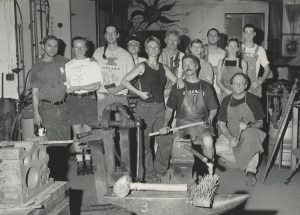 residential craft schools west of the Mississippi and the only that offers intensive classes in blacksmithing. Each summer since 2019 we have offered one-week and two-week blacksmithing classes for toolmaking, smelting iron ore, creating sculpture, and more. We also offer month-long Artists in Residency, host one intern each summer, and produce short educational videos online detailing specific blacksmith techniques and processes. Our objective is to be a creative hub for traditional rural craft in the Northern Rockies, built on a foundation of blacksmithingas a heritage art that facilitates other historic crafts, such as woodworking. We are fundamentally committed to honoring historic traditions and contributing to their endurance and evolution into the future.
While our students and instructors alike travel from all over the United States to take our classes, the school has a strong sense of place. Many students stay in onsite housing and evenings are often filled with the exchange of creative ideas over group meals organized by the students. Collaboration is a key component of the culture we aim to create, and traditional handcraft is the means our programs empower people to tangibly contribute to their communities and develop personal relationships with local material resources.